
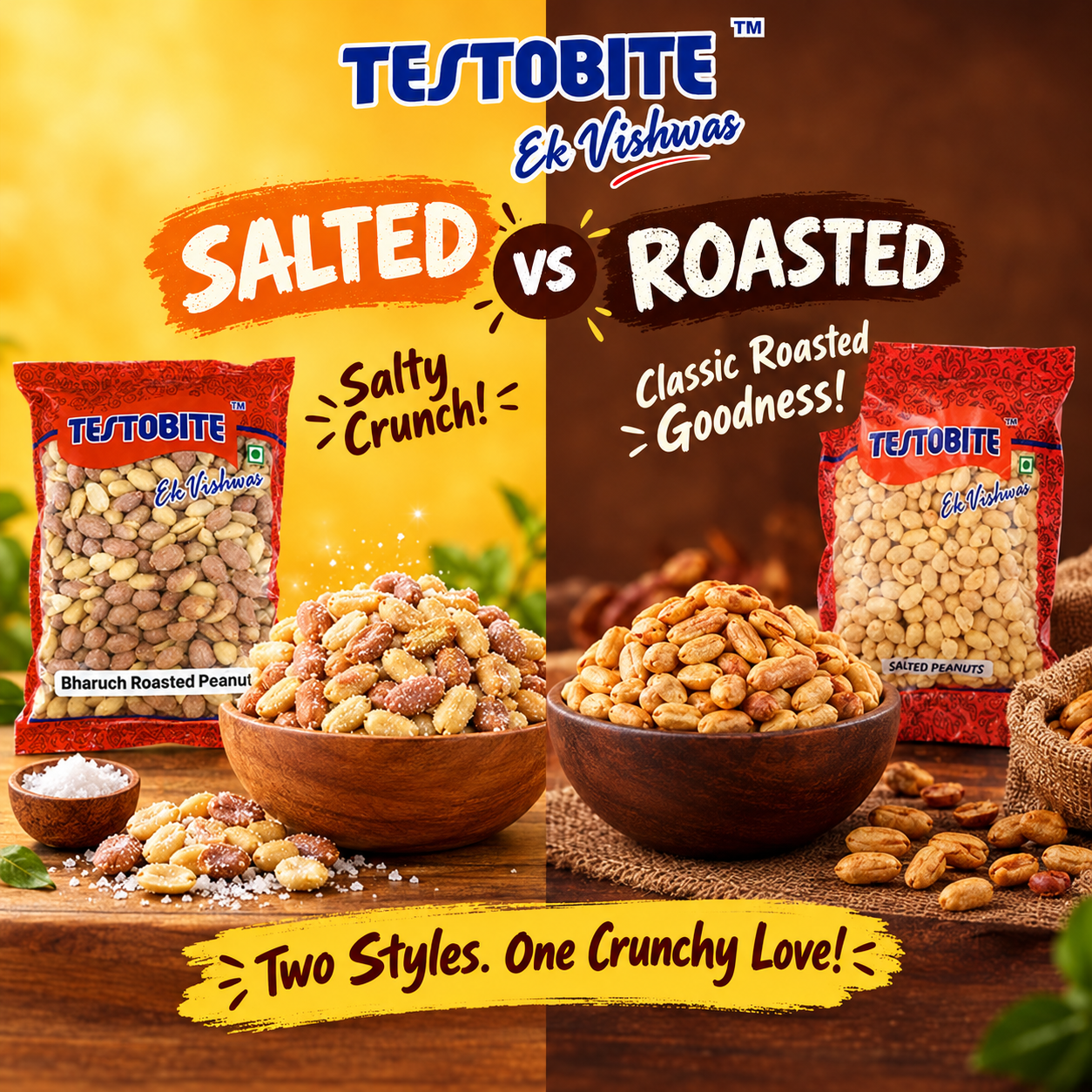
Peanuts are one of India’s favourite snacks. From enjoying singdana with evening tea to sharing a bowl with family and friends, peanuts are a familiar part of everyday snacking. But when choosing between salted peanuts and roasted peanuts, one question often comes up: which option is healthier?
The answer depends on how the peanuts are prepared, how much salt or oil is added and how much you eat. Plain roasted peanuts provide plant-based protein, unsaturated fats, fibre and essential nutrients. Salted peanuts can offer similar nutrients, but they generally contain added sodium.
If you enjoy peanuts regularly, understanding the difference between salted peanuts vs roasted peanuts can help you make an informed choice for your daily diet.
What Is the Difference Between Salted Peanuts and Roasted Peanuts?
Both salted peanuts and roasted peanuts begin with peanuts, but their preparation and seasoning can differ.
Roasted peanuts are heated to develop their crunchy texture and characteristic flavour. They may be prepared without added oil or salt, although some products contain additional ingredients.
Salted peanuts are peanuts with added salt. Depending on the product, they may be dry-roasted, oil-roasted or prepared using another roasting method.
The most important distinction is that roasted peanuts are not necessarily unsalted, and salted peanuts are not necessarily fried. Always check the ingredient list and nutrition label to understand what you are buying.
Salted Peanuts vs Roasted Peanuts: Quick Comparison
| Feature | Plain Roasted Peanuts | Salted Peanuts |
|---|---|---|
| Protein | Naturally provides plant-based protein | Naturally provides plant-based protein |
| Unsaturated fats | Naturally contains unsaturated fats | Naturally contains unsaturated fats |
| Dietary fibre | Provides dietary fibre | Provides dietary fibre |
| Sodium | Usually lower when no salt is added | Generally higher because salt is added |
| Calories | Depends on preparation and serving size | Depends on preparation, added oil and serving size |
| Flavour | Nutty and crunchy | Salty, savoury and crunchy |
| Best consideration | Useful for people limiting added sodium | Check sodium content and portion size |
| Daily diet | Can fit into a balanced diet | Can also fit into a balanced diet, depending on individual needs |
The exact nutritional values depend on the peanut variety, preparation method, added ingredients and serving size.
Health Benefits of Plain Roasted Peanuts
Plain roasted peanuts can be a nutritious snack when eaten in suitable portions as part of a balanced diet.
Provides Plant-Based Protein
Peanuts naturally contain protein, which supports normal growth and tissue maintenance. Including peanuts alongside other protein sources, such as pulses, beans, dairy products or soy foods, can contribute to a varied diet.
The amount of protein you receive depends on your serving size. Check the nutrition label when comparing packaged products.
Contains Unsaturated Fats
Peanuts contain predominantly unsaturated fats. Replacing some foods high in saturated fat with foods containing unsaturated fats can support a heart-conscious eating pattern.
However, the overall quality of your diet matters more than any individual snack.
Supplies Essential Nutrients
Peanuts provide nutrients such as magnesium, phosphorus, niacin and vitamin E. These contribute to normal bodily functions, including energy metabolism and cellular protection.
Plain roasted peanuts can contribute to nutrient intake, but they should be combined with other nutritious foods rather than treated as a complete source of every essential nutrient.
Provides Dietary Fibre
Peanuts contain dietary fibre, which contributes to normal digestive function. Eating a variety of fibre-containing foods, including fruits, vegetables, pulses and whole grains, helps support a balanced diet.
Gives You a Convenient Snack Option
Roasted peanuts are easy to serve and can be convenient during office breaks, travel or evening tea time. A measured portion can also be added to homemade salads or snack mixes.
Because peanuts are energy-dense, portion size is important even when you choose an unsalted variety.
What About Salted Peanuts?
Salted peanuts provide many of the same naturally occurring nutrients as plain roasted peanuts. The main nutritional difference is the additional sodium from salt.
The Role of Sodium in Your Diet
Sodium is an essential nutrient that helps regulate fluid balance and supports normal nerve and muscle function. However, regularly consuming too much sodium can contribute to high blood pressure in some people and increase cardiovascular risk.
Salted peanuts can contribute to daily sodium intake, particularly when eaten in large portions or alongside other salty foods.
If you have high blood pressure or have been advised to limit sodium, check the nutrition label and follow your healthcare professional’s guidance.
Salted Peanuts Are Not Automatically Unhealthy
Adding salt does not remove the protein or unsaturated fats naturally present in peanuts. A suitable portion of salted peanuts can fit into some people’s diets.
The important considerations are the sodium content, preparation method, portion size and your overall eating pattern.
If you enjoy the taste of salted peanuts, compare different products and choose an option that fits your nutritional needs.
Which Is Better for Heart Health?
If your main goal is to reduce sodium intake, plain roasted peanuts without added salt are generally the better choice.
Peanuts contain unsaturated fats, and replacing certain foods high in saturated fat with foods containing unsaturated fats can support cardiovascular health. Choosing an unsalted variety also makes it easier to manage how much sodium you consume.
Salted peanuts may still fit into a balanced diet, but people who need to monitor their sodium intake should pay closer attention to serving sizes and product labels.
Remember that heart health depends on several factors, including overall dietary patterns, physical activity, sleep, genetics and medical conditions. No single food can guarantee protection from heart disease.
Which Is Better for Weight Management?
Neither salted nor plain roasted peanuts automatically cause weight gain or weight loss.
Peanuts contain protein, fats and some fibre, which can contribute to feelings of fullness. However, they are also energy-dense, meaning that even a small quantity provides a substantial amount of energy.
For weight management, consider these practical habits:
- Serve a portion in a small bowl instead of eating directly from a large packet.
- Check the calorie information per serving.
- Compare products prepared with and without added oil.
- Include peanuts within your overall daily food intake.
- Choose a snack portion that suits your appetite and nutritional needs.
Plain roasted peanuts may make it easier to reduce added sodium, but they are not automatically lower in calories than salted peanuts. Compare the actual nutrition labels before deciding.
Salted Peanuts vs Roasted Peanuts for Daily Snacking
The best choice depends on your taste preferences and health requirements.
If You Want to Limit Sodium
Choose plain roasted peanuts with no added salt, and verify the sodium content on the packaging.
If You Prefer a Salty Flavour
Salted peanuts may suit your taste preferences. Compare sodium levels across products and pay attention to the amount you eat.
If You Want a Convenient Office Snack
Either option can be convenient. Choose a suitable portion, check the ingredients and store the product according to the packaging instructions.
If You Are Serving Peanuts to Family
Consider everyone’s dietary needs, especially if someone needs to limit sodium. Remember that whole peanuts are a choking hazard for young children, and peanuts can cause severe allergic reactions.
How to Read a Peanut Nutrition Label
Comparing labels is one of the easiest ways to understand the difference between salted and roasted peanut products.
Check the Sodium Content
Look at sodium per serving and compare it with other products. Do not rely on the words “lightly salted” alone.
Check the Ingredient List
Plain roasted peanuts may contain only peanuts, while other varieties may include salt, added oil or seasonings.
Compare Serving Sizes
Two products may list different nutrition values because their serving sizes differ. Compare equivalent quantities for a fair assessment.
Review Calories and Fat
Peanuts naturally contain fat and are energy-dense. Check the calorie and fat values to understand how a portion fits into your daily diet.
Check Allergen Information
Peanuts are a major food allergen. Anyone with a peanut allergy should avoid peanut products and follow medical advice regarding allergen safety.
Easy Ways to Enjoy Roasted Peanuts
Whether you choose salted peanuts or plain roasted peanuts, you can enjoy them in different ways.
Evening Tea-Time Snack
Serve a measured portion alongside tea or another preferred beverage.
Homemade Peanut Chaat
Combine roasted peanuts with chopped tomato, onion, coriander and lemon juice. Adjust the seasoning to your preference.
Crunchy Salad Topping
Add chopped roasted peanuts to a homemade salad for texture and flavour.
Homemade Snack Mix
Combine peanuts with suitable seeds or dried fruit to make a snack mix. Keep the portion moderate because these ingredients can be energy-dense.
Travel-Friendly Snack
Pack a suitable portion in a clean, dry container. Follow the product’s storage instructions to help maintain quality.
Frequently Asked Questions
Are roasted peanuts healthier than salted peanuts?
Plain roasted peanuts without added salt are generally a better choice if you want to reduce sodium intake. Both options can provide protein, unsaturated fats and other nutrients.
Do salted peanuts contain less protein?
Not necessarily. Salt does not remove the protein naturally present in peanuts. However, the protein content per serving can vary by product and serving size.
Can I eat salted peanuts every day?
That depends on your total sodium intake, portion size and individual health needs. If you have been advised to limit sodium, choose an appropriate product and follow professional guidance.
Are dry-roasted peanuts healthier than oil-roasted peanuts?
Dry-roasted peanuts are prepared without adding oil during roasting, whereas oil-roasted varieties may contain additional oil. The calorie and fat differences depend on the preparation and final product, so compare nutrition labels.
Which peanuts are better for high blood pressure?
Unsalted peanuts are generally preferable when reducing sodium intake. They do not replace prescribed medication or other medical advice for managing high blood pressure.
Are roasted peanuts good for protein?
Yes. Peanuts naturally provide plant-based protein. The amount you consume depends on your portion size, so check the nutrition label for exact figures.
Choose Your Favourite Peanut Snack with Testobite
Peanuts are a familiar Indian snack that can fit into many everyday routines. Whether you prefer the straightforward taste of roasted peanuts or the savoury flavour of salted varieties, reading the product label can help you choose according to your preferences.
Explore the available snack range at Testobite and check the current product details before purchasing.
Website: https://testobite.in/
Call or WhatsApp: +91 72089 50312
Email: info@testobite.in
Testobite — Ek Vishwas.
Final Verdict: Salted Peanuts or Roasted Peanuts?
If your priority is reducing added sodium, plain roasted peanuts without added salt are generally the better choice. They provide naturally occurring protein, unsaturated fats, fibre and several essential nutrients without the extra salt.
Salted peanuts can also fit into a balanced diet, depending on the sodium content, portion size and your individual needs.
The smartest approach is to compare the nutrition labels, choose appropriate portions and enjoy peanuts as one part of a varied diet.
Disclaimer: This article is for general educational purposes only and is not a substitute for medical advice. Nutritional values vary by product and preparation method. People with peanut allergies should avoid peanut products.
Follow Testobite on Social Media!
Facebook | Instagram | X (Twitter) | YouTube | LinkedIn