
Have you ever wondered whether your everyday snack could do more than satisfy your hunger? Peanuts are a familiar favourite in Indian households, enjoyed during tea breaks, office hours, travel and family gatherings. But emerging research suggests that peanuts may also have a role in supporting brain health and certain aspects of memory.
A 2025 clinical trial published in Clinical Nutrition found that regular consumption of unsalted, skin-roasted peanuts improved brain blood flow and produced a modest improvement in one measure of verbal memory among healthy older adults. However, the findings are promising rather than conclusive, and another small clinical trial published in 2026 did not find significant improvements in cognitive performance. Peanuts for Brain Health
So, what does the research actually tell us? Let’s explore the potential connection between peanuts, memory and brain health, along with practical ways to include peanuts in a balanced diet.
What Does the New Research Say About Peanuts and Memory?
A randomized, controlled crossover trial published online in November 2025 investigated the effects of peanut consumption on brain blood flow and cognitive performance in older adults.
The study involved 31 healthy participants with an average age of approximately 67 years. Participants consumed 60 grams of unsalted, skin-roasted peanuts daily for 16 weeks during one phase of the study and followed a control period without peanuts during another phase.
The researchers reported two notable findings:
- Improved brain blood flow: Global cerebral blood flow increased by approximately 3.6% during the peanut intervention compared with the control condition.
- A modest improvement in verbal memory: Performance on a delayed verbal recognition memory measure improved by approximately 5.8%.
The researchers did not observe significant benefits across every cognitive measure, including executive function and psychomotor speed.
These findings suggest that regular peanut consumption may support certain aspects of brain vascular function and memory in healthy older adults. However, the trial was small, and the results do not establish that peanuts prevent dementia or improve memory in everyone.
Read the published research: Clinical Nutrition peanut and brain health study.
Do Peanuts Really Boost Memory?
The answer is more nuanced than a simple yes or no.
Some research suggests that peanuts and peanut products may be associated with better performance on specific memory tests. Other studies have reported improvements in selected cognitive outcomes after regular peanut consumption. However, findings vary depending on the participants, study design, amount consumed and cognitive tests used.
For example, a 2021 study examined dietary information and cognitive test results from 2,454 adults aged 60–80. Researchers found that peanut and peanut butter consumers were less likely to perform poorly on several cognitive measures than non-consumers.
However, this was a cross-sectional study. It could identify an association but could not establish that eating peanuts caused better cognitive performance.
There is also important counterevidence. A 2026 randomized controlled trial involving older adults with memory complaints and cardiovascular risk factors found no significant differences in cognitive performance between the peanut group and the control group after 12 weeks.
Taken together, the research is encouraging but mixed. Peanuts can contribute useful nutrients to a balanced diet, but they should not be considered a proven memory booster or a treatment for cognitive problems.
Research references:
- Peanut consumption and cognitive function in older adults
- 2026 randomized trial of peanuts, cognition and brain activity
Nutrients in Peanuts That Matter for Brain Health
Peanuts provide several nutrients that contribute to normal body functions, including functions important to the nervous system. Their value comes from their overall nutritional composition rather than a single special ingredient.
Healthy Unsaturated Fats
Peanuts contain predominantly unsaturated fats, including monounsaturated and polyunsaturated fatty acids.
Dietary fats provide energy and support normal cell function. Maintaining cardiovascular health is also important because the brain depends on a continuous supply of oxygen and nutrients through the bloodstream.
The 2025 clinical trial provides a reason to investigate further whether peanuts can support brain blood flow. It does not prove that their unsaturated fats alone caused the observed effects.
Protein for Everyday Nutrition
Peanuts provide plant-based protein, which supports the growth and maintenance of body tissues.
Including protein-containing foods as part of balanced meals can help meet daily nutritional needs. Peanuts can contribute to this intake, although they should be combined with other protein sources to support a varied diet.
Vitamin E in Peanuts and Brain Health
Peanuts contain vitamin E and various plant compounds, including polyphenols. Vitamin E helps protect cells from oxidative damage as part of the body’s antioxidant defence system.
Peanut skins contain some of these plant compounds, which is one reason skin-roasted peanuts have attracted research interest.
Nevertheless, the presence of antioxidants in a food does not automatically mean that eating it will improve memory or prevent age-related cognitive decline.
B Vitamins and Other Micronutrients
Peanuts provide several B vitamins and minerals involved in normal metabolic and nervous-system functions. For example, niacin helps the body convert food into usable energy, while folate supports normal cell division.
These nutrients contribute to overall nutritional adequacy. Their presence should not be interpreted as evidence that peanuts can independently improve concentration or treat a vitamin deficiency.
How Can You Include Peanuts in a Brain-Healthy Diet?
Peanuts can be a convenient addition to everyday meals and snacks. You do not need to follow the exact quantity used in a clinical trial to enjoy them as part of a balanced eating pattern.
Here are some practical ideas.
1. Enjoy Peanuts During Your Tea Break
A small serving of roasted peanuts can be a satisfying accompaniment to your morning or evening tea.
Choose a portion that fits your overall energy needs, and consider unsalted or lightly salted options if you are monitoring your sodium intake.
2. Add Peanuts to Homemade Bhel
Mix roasted peanuts with chopped onion, tomato, coriander, cucumber and puffed rice. Add lemon juice and spices to taste.
This creates a crunchy snack with a combination of textures and ingredients. You can adjust the amount of salt and oil when preparing it at home.
3. Sprinkle Peanuts Over Salads
Crushed roasted peanuts add crunch to vegetable salads, sprout chaat and homemade grain bowls.
Pair them with vegetables, whole grains and other protein sources to create a more varied meal rather than relying on peanuts alone.
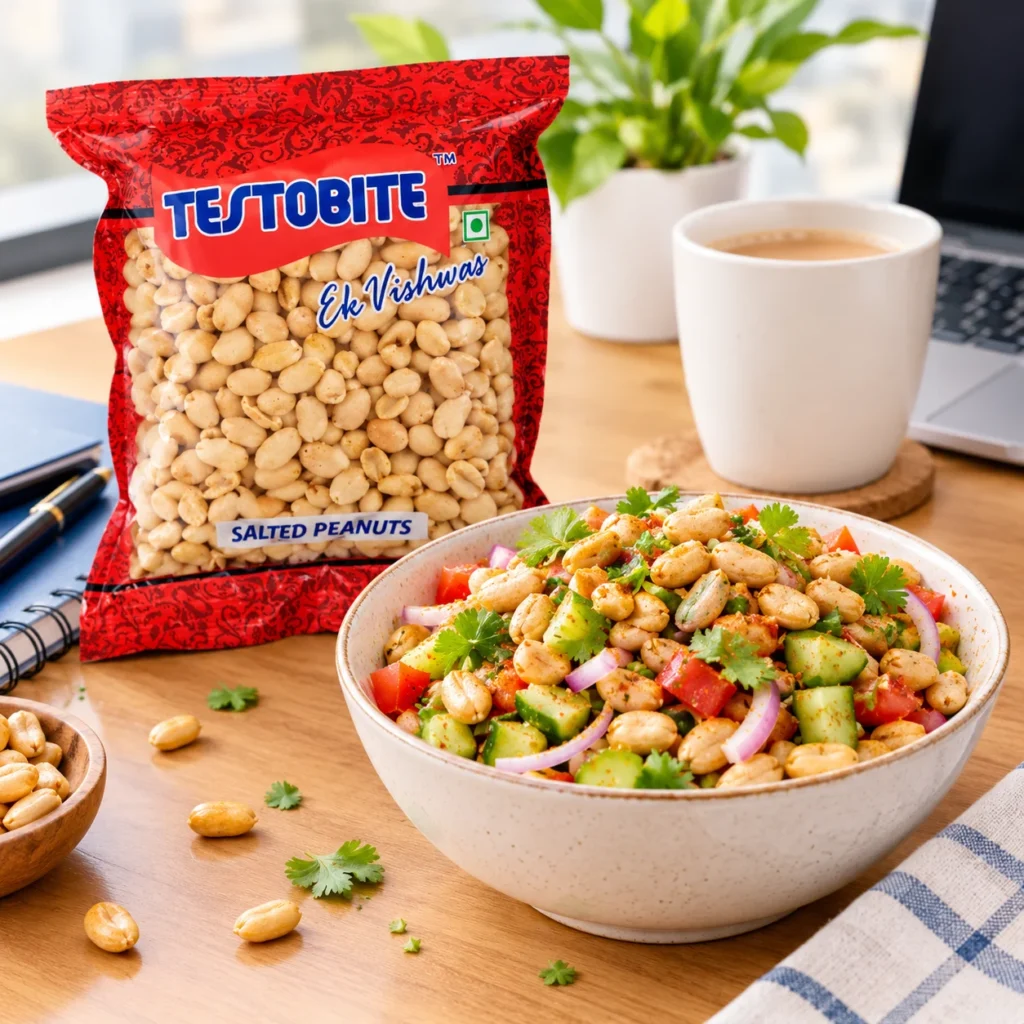
4. Peanuts for Brain Health: Key Nutrients and Benefits
A balanced diet can include peanuts alongside fruit, vegetables, pulses, whole grains, seeds and other nuts.
For example, you could pair a small serving of peanuts with a fruit during a busy workday or add them to a homemade snack mix.
No single food provides everything the brain needs. Overall dietary variety and consistent eating habits matter more than depending on one ingredient.
How Many Peanuts Should You Eat Daily?
There is no universally established peanut serving specifically for improving memory.
A practical starting point for many adults is around 25–30 grams of peanuts, adjusted to individual energy needs and the rest of the diet. This is a general serving suggestion, not a proven dose for cognitive benefits.
Importantly, the 2025 clinical trial used 60 grams of unsalted, skin-roasted peanuts daily. That study quantity should not automatically be treated as a recommendation for everyone.
Peanuts are energy-dense, so portion size matters. If you eat them frequently, consider how they fit into your overall food intake.
People with peanut allergies must avoid peanuts and products containing them. Anyone managing a medical condition or following a prescribed diet should seek individualized advice from a qualified healthcare professional when needed.
Roasted Peanuts vs. Salted Peanuts: Which Is Better for Everyday Snacking?
Both roasted and salted peanuts can fit into a balanced diet, depending on the preparation and your dietary requirements.
Unsalted roasted peanuts can be useful if you want to limit sodium intake while enjoying the natural flavour and crunch of peanuts.
Salted peanuts may appeal to people who prefer a savoury snack, but frequent high-sodium food choices can make it harder to manage total salt intake.
Masala peanuts offer a more strongly seasoned flavour. Their nutritional profile depends on the recipe, including the amount of salt, oil, coating and other ingredients used.
When choosing a packaged peanut snack, read the ingredient list, nutrition information, serving size and allergen declaration. Do not assume that every roasted, salted or masala peanut product has the same nutritional composition.
For everyday snacking, select a product that suits your taste preferences and dietary needs, and enjoy it in a sensible portion.
Other Habits That Support Brain Health
Eating peanuts may contribute to a nutritious diet, but brain health depends on much more than one food.
Consider combining balanced eating habits with the following practices:
- Get adequate sleep: Consistent, sufficient sleep supports attention, learning and memory processes.
- Stay physically active: Regular physical activity supports cardiovascular health and overall well-being.
- Challenge your brain: Reading, learning new skills, playing strategy games and engaging in meaningful conversations can provide mental stimulation.
- Maintain social connections: Social engagement can support emotional well-being and provide opportunities for cognitive activity.
- Manage cardiovascular risk factors: Work with a healthcare professional to address blood pressure, cholesterol, diabetes and other relevant health concerns.
- Eat a varied diet: Include vegetables, fruits, legumes, whole grains, nuts and other nutrient-rich foods.
If you experience persistent or worsening memory difficulties, consult a healthcare professional rather than relying on dietary changes alone.
Useful Links:
- Salted Peanuts 200g
- Salted Peanuts 150g
- Chana Jor 300g
- Chana Jor 200g
- Vatana 150g
- Yellow Chana 150g
- Mahabaleshwar Chana 150g
- Black Pepper Chana 150g
- Roasted Peanuts 200g
- Roasted Peanuts 500g
- Masala Sing 200g
- Testobite Sing Bhujia 200g
- Subscribe our YouTube Channel
Frequently Asked Questions
Are peanuts good for brain health?
Peanuts provide unsaturated fats, protein, vitamin E and other nutrients that contribute to normal nutrition. Small clinical trials suggest potential benefits for brain blood flow and certain memory measures, but the evidence is not yet conclusive.
Can eating peanuts improve memory?
Some studies have reported improvements in specific memory tests, while other research has found no significant cognitive benefit. Peanuts may form part of a balanced diet, but they are not a guaranteed way to improve memory.
Are roasted peanuts better than fried peanuts?
Preparation matters. Dry-roasted or skin-roasted peanuts can be convenient options, while fried or heavily seasoned varieties may contain additional oil or sodium. Compare the actual ingredient lists and nutrition labels rather than relying on the product name alone.
Should I eat peanuts every day?
Peanuts can be included regularly if you enjoy them, tolerate them and have no peanut allergy. The appropriate portion depends on your dietary needs, total energy intake and any medical guidance you follow.
Can peanuts prevent Alzheimer’s disease?
There is currently insufficient evidence to conclude that eating peanuts prevents Alzheimer’s disease or dementia. Research into peanuts and cognitive health is ongoing, and findings from small trials should not be treated as proof of disease prevention.
Make Everyday Snacking Part of a Balanced Lifestyle With Testobite
A simple snack can be part of a thoughtful approach to everyday nutrition. Peanuts offer familiar flavour, satisfying crunch and useful nutrients that fit into a varied diet.
Emerging research into peanuts and brain health is promising, particularly regarding brain blood flow and selected memory measures. However, the scientific evidence remains limited, and no single snack can replace a balanced diet, healthy habits or appropriate medical care.
If you enjoy peanuts during tea breaks, at work or with family, explore the available peanut snack options from Testobite. Check each product’s ingredient list, nutrition information and allergen declaration to choose an option that suits your preferences.
Testobite — Ek Vishwas.
Website: testobite.in/
Contact: +91 72089 50312