Finding snacks that children enjoy and parents feel comfortable serving can be a daily challenge. Between school hours, homework, outdoor play and evening activities, kids often look for something tasty to eat between meals. Parents, meanwhile, want snack options that are convenient, enjoyable and capable of contributing to a balanced diet.
Chana snacks for kids are one option worth exploring. Chana, also known as chickpeas or gram, is a familiar ingredient in Indian households. Depending on how it is prepared, it can provide plant-based protein, dietary fibre and essential nutrients. From crunchy roasted chana to colourful homemade chaat, there are several ways to make chana part of a child’s snack routine.
For families looking for healthy snacks for kids in Bharat, traditional Indian ingredients offer plenty of inspiration. The key is to choose age-appropriate textures, check packaged snack labels and serve a variety of nutritious foods throughout the day.
how to make chana snacks for kids
Chana has been part of Indian cooking for generations. It appears in dishes such as chana masala, sundal, chaat and roasted gram preparations. Its versatility makes it easy to adapt to different tastes and family routines.
Here are some nutritional reasons to consider chana as part of a balanced diet.
Provides Plant-Based Protein
Protein supports normal growth and helps the body build and maintain tissues. Chickpeas contain plant-based protein, making them a useful ingredient in a varied diet.
Children also need protein from a range of foods, such as dal, beans, dairy products, soy foods, nuts and seeds when age-appropriate and safe. No single snack can meet all of a child’s nutritional needs, so variety remains important.
Contains Dietary Fibre
Chickpeas naturally contain dietary fibre, which supports normal digestion. Including fibre-containing foods such as pulses, vegetables, fruits and whole grains can contribute to a balanced eating pattern.
Introduce higher-fibre foods according to your child’s age and tolerance, and encourage regular water intake.
Supplies Essential Nutrients
Chana can provide nutrients such as folate, iron and other minerals. These contribute to normal body functions, including cell division and red blood cell production.
Nutrient levels vary according to the type of chana and how it is prepared. For packaged products, check the nutrition label rather than assuming every variety offers the same nutritional profile.
Offers Familiar Indian Flavours
Many Indian families already enjoy chana in homemade meals and snacks. Mildly seasoned chana, lemony chaat and simple roasted gram preparations can introduce children to familiar ingredients in different forms.
For younger children, texture and preparation are especially important. Whole, hard or crunchy chana can pose a choking risk, so it should not be offered to children who are not developmentally ready to manage it safely.
Healthy Snacks for Kids Bharat: Easy Chana Ideas
A snack does not have to be complicated to be enjoyable. Simple preparations can help parents add variety to everyday meals.
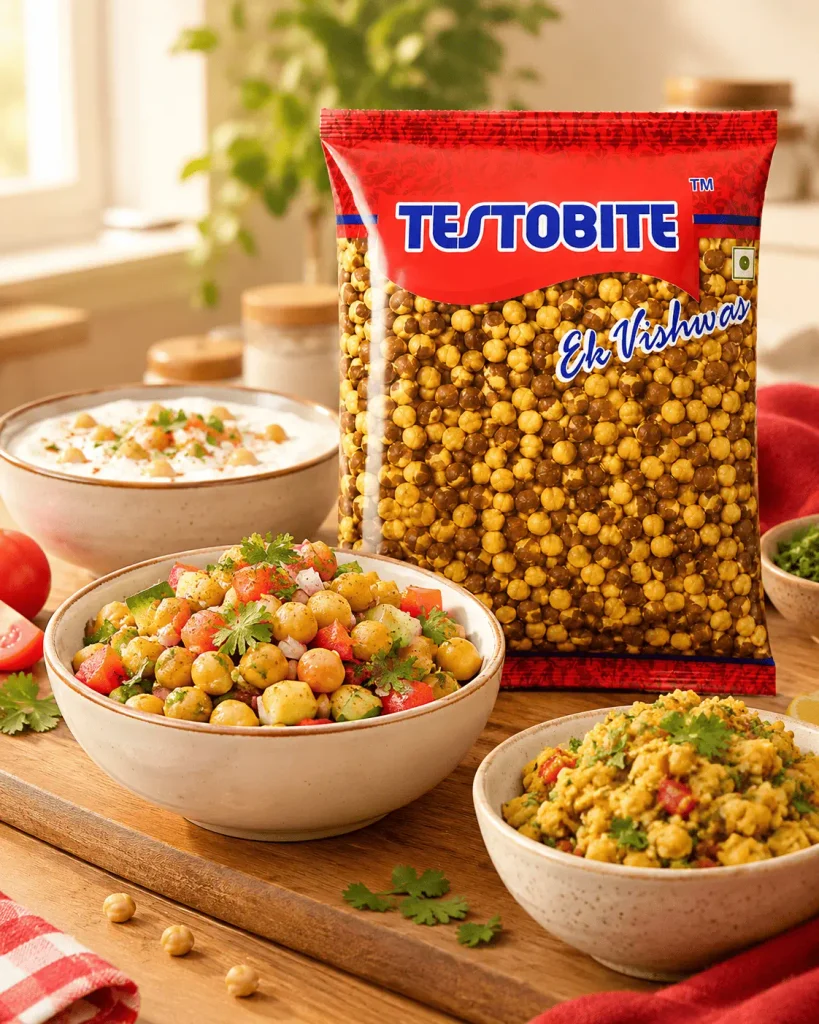
Homemade Chana Chaat
Combine soft, cooked chickpeas with finely chopped tomato, cucumber and coriander. Add a little lemon juice and mild seasoning if suitable for your child.
For younger children, prepare the ingredients in a texture and size appropriate to their developmental stage. Avoid hard, whole chickpeas if they cannot chew them safely.
Soft Chana and Vegetable Bowl
Mix well-cooked, soft chickpeas with mashed vegetables such as potato, carrot or pumpkin. This creates a simple snack with different textures and flavours.
Serve it fresh and adjust the consistency to suit your child’s age and chewing ability.
Roasted Chana for Older Children
For older children who can safely manage the texture, roasted chana may be a convenient snack option. Choose an appropriate portion and check the ingredients, salt content and nutritional information on the package.
Do not give hard, whole roasted chana to toddlers or young children who are at risk of choking.
Chana and Yoghurt Bowl
Combine soft, cooked chickpeas with plain yoghurt and a little mild seasoning. This can provide a different taste and texture while adding variety to a snack routine.
Keep perishable foods refrigerated as appropriate and avoid leaving them at room temperature for extended periods.
Homemade Chana Bhel
Mix soft chickpeas with finely chopped vegetables and a little lemon juice for a fresh homemade snack. Add crunchy toppings only when they are safe for the child’s age and chewing ability.
Preparing snacks at home also allows parents to adjust spice levels and control the ingredients.
A Real-Life Story: Meera’s After-School Snack Routine
Consider this illustrative, everyday family scenario.
Meera is a working mother living in Pune. Every afternoon, when her eight-year-old son returns from school, he heads straight to the kitchen asking for something crunchy. Packaged savoury snacks were often the first thing he reached for, while Meera wanted to introduce more variety into his afternoon routine.
Instead of changing everything at once, she began planning a few simple options for the week. On some days, she served homemade chana chaat with cucumber and tomato. On other days, she offered soft chickpeas mixed with yoghurt or a small snack prepared from ingredients already available at home.
For days when they were short on time, she checked packaged snack labels before deciding what to buy. She paid attention to serving size, sodium, ingredients and age-appropriate texture. She also made sure that any whole or hard snacks were kept away from younger children in the family.
The biggest change was not a magical nutritional result. It was that planning ahead gave the family more choices, reduced last-minute snack decisions and made it easier to include different foods during the week.
Meera’s story is an illustrative example, not a verified testimonial or a claim about a specific customer’s experience. It highlights a practical lesson for families: small, consistent changes can make everyday snacking easier to manage.
How to Choose Packaged Chana Snacks for Children
Packaged snacks can be convenient for busy school and family schedules. However, not every product is suitable for every child, and the word “healthy” should not replace checking the actual product information.
Before buying a packaged chana snack, consider these points.
Read the Ingredient List
Check the ingredients for chickpeas, oils, seasonings and other additions. If your child has a known food allergy, review the allergen declaration and manufacturing warnings carefully.
Check Sodium Content
Some savoury snacks contain added salt. Compare the sodium information per serving and consider how the snack fits into your child’s overall diet.
Look at the Serving Size
The amount a child eats may differ from the manufacturer’s stated serving size. Use the label to understand the nutritional contribution of the portion being offered.
Consider Texture and Age
Hard, whole chickpeas and crunchy roasted snacks can be choking hazards for young children. Choose foods according to developmental readiness, supervise children while eating and follow age-appropriate feeding guidance.
For infants and toddlers, consult a paediatrician or qualified feeding professional if you are unsure which textures are safe.
Avoid Unsupported Health Claims
A snack containing chana is not automatically a complete meal or a guaranteed source of every nutrient a child needs. Look at the actual nutrition panel and remember that children’s growth depends on their overall diet, health and individual requirements.
Making Snack Time Fun Without Adding Extra Work
Children may be more interested in food when they can participate in simple, age-appropriate preparation activities. Parents can offer choices between two suitable snacks, let older children help mix ingredients or arrange vegetables into colourful patterns.
Here are a few practical ideas:
- Prepare a weekly snack plan with two or three easy options.
- Keep suitable ingredients ready for quick homemade chaat.
- Offer a variety of fruits, vegetables, pulses and other foods across the week.
- Adjust spices to your child’s preferences.
- Serve snacks at a table and encourage children to sit while eating.
- Keep hard, whole and potentially choking-prone foods away from young children.
Avoid pressuring children to finish a particular food. Repeated, relaxed exposure to different foods can help them become familiar with new tastes and textures.
How Often Should Kids Eat Chana Snacks?
There is no single serving size or frequency that suits every child. Age, appetite, activity level, overall food intake and individual health needs all matter.
Chana can be included as one component of a varied diet, but children also need other foods to meet their energy and nutrient requirements. A balanced routine can include grains, pulses, vegetables, fruits, dairy or suitable alternatives, and other foods appropriate to the child’s age and dietary needs.
If a child has food allergies, digestive concerns, poor growth or specific nutritional requirements, ask a qualified healthcare professional for personalised guidance.
Frequently Asked Questions
Are chana snacks healthy for kids?
Chana can contribute plant-based protein, fibre and certain micronutrients to a balanced diet. The nutritional value depends on the preparation method, portion size and any added salt or oil. Texture must also be appropriate for the child’s age.
Which chana snacks are suitable for school-age children?
Depending on the child’s chewing ability and preferences, options may include soft chana chaat, well-cooked chickpeas or an appropriate portion of roasted chana for older children who can manage it safely. Follow school food policies and consider allergy requirements.
Can toddlers eat roasted chana?
Hard, whole roasted chana can pose a choking risk for toddlers and young children. Choose age-appropriate soft textures and seek paediatric feeding guidance if you are unsure.
Are packaged chana snacks suitable for lunchboxes?
Some may be convenient, but suitability depends on the product ingredients, nutrition information, the child’s age and the school’s allergy policies. Review the label and consider whether the texture is safe for your child.
Does chana provide protein for growing children?
Yes, chickpeas naturally provide plant-based protein. Children need a variety of foods to meet their nutritional needs, and individual requirements vary with age and development.
Make Everyday Snacking Easier with Testobite
For busy Indian families, a little snack planning can make everyday routines more manageable. Traditional ingredients such as chana offer many possibilities, from homemade chaat to convenient packaged options.
Explore the available snack range and product information at https://testobite.in/. Before choosing a packaged product for your child, check the current ingredient list, nutrition panel, allergen information and age-appropriate serving considerations.
Website: https://testobite.in/
Call or WhatsApp: in
Email: info@testobite.in
Testobite — Ek Vishwas.
Final Thoughts
Chana snacks can add variety to children’s everyday eating routines when prepared and served appropriately. Chickpeas provide plant-based protein, fibre and useful nutrients, while homemade recipes give parents flexibility over ingredients and seasoning.
For families looking for healthy snacks for kids in Bharat, the most useful approach is to combine variety, sensible label reading, age-appropriate food preparation and safe eating habits. No single snack needs to do everything. A balanced routine, planned around the child’s needs, is what matters most.
Disclaimer: This article is for general informational purposes only and is not a substitute for personalised paediatric or nutrition advice. Always consider choking hazards, allergies and your child’s developmental stage when selecting snacks.